Barnyard Millets- Nutrition, Uses, Health Benefits, and More

11,95
Barnyard Millets- Nutrition, Uses, Health Benefits, and More…..

Millets Diet in Ayurveda: An Ancient Grain for Modern Health.

Millets, a group of small-seeded grasses, have been a staple in traditional diets across
various cultures, particularly in Asia and Africa. In Ayurveda, an ancient system of medicine
originating from India, millets hold a significant place due to their unique nutritional profile
and health benefits. This article explores the Ayurvedic benefits of millets, emphasizing their
nutritional value, therapeutic properties, and their role in promoting health and well-being.

Ayurveda, a holistic healing system, places a strong emphasis on diet and nutrition as a means to maintain health and prevent disease. Millets, known for their resilience and adaptability, are integral to Ayurvedic dietary practices. This study delves into the Ayurvedic perspective on millets, highlighting their benefits and the scientific basis for these traditional claims.

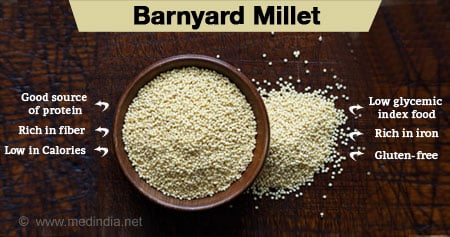
Nutritional Profile of Millets
Millets are rich in essential nutrients, including:
• Proteins: Millets contain high-quality protein, which is crucial for tissue repair and
growth.
• Fiber: They are an excellent source of dietary fiber, aiding in digestion and promoting gut
health.
• Vitamins and Minerals: Millets are packed with vitamins (such as B-complex vitamins)
and minerals (including magnesium, phosphorus, and iron).
• Antioxidants: They contain phenolic compounds that have antioxidant properties.
Ayurvedic Properties of Millets
According to Ayurveda, millets possess several health benefits, categorized under their taste (Rasa), energy (Virya), and post-digestive effect (Vipaka). Key Ayurvedic properties of
millets include:
• Rasa (Taste): Millets generally have a sweet and astringent taste.
• Virya (Energy): They are predominantly cooling in nature.
• Vipaka (Post-digestive Effect): They produce a sweet post-digestive effect, which is
soothing for the body.

Health Benefits in Ayurveda
1) Digestive Health
Millets are easily digestible and help in maintaining a healthy digestive tract. They
balance the Kapha and Pitta doshas, making them suitable for individuals with digestive
issues.

2) Diabetes Management
Millets have a low glycemic index, which helps in managing blood sugar levels.
Ayurveda recommends millets for diabetic patients to stabilize energy and reduce sugar
spikes.
3) Weight Management
The high fiber content in millets aids in weight management by promoting satiety and
reducing overall calorie intake. They are particularly beneficial for Kapha dosha
individuals who tend to gain weight easily.
4) Cardiovascular Health
Millets support cardiovascular health by reducing cholesterol levels and improving lipid
profiles. Their magnesium content helps in relaxing the blood vessels, thereby controlling
blood pressure.
5) Detoxification
Millets assist in detoxifying the body by eliminating toxins and cleansing the liver. Their
cooling effect helps in soothing the body and reducing inflammation.
Scientific Validation of Ayurvedic Claims
Recent scientific studies corroborate the Ayurvedic claims about the benefits of millets.
Research indicates that the antioxidants present in millets can combat oxidative stress and
reduce the risk of chronic diseases. Studies have also shown that millets can improve lipid
metabolism and enhance insulin sensitivity.
CONCLUSION
Millets, with their rich nutritional profile and therapeutic properties, play a crucial role in
Ayurveda. They offer a plethora of health benefits, ranging from improved digestion to better cardiovascular health. Incorporating millets into the diet can provide a natural, holistic approach to health and well-being, aligning with the principles of Ayurveda.

Preparing Millet for Cooking

Before cooking millet, it’s essential to prepare it properly to reduce phytic acid and enhance its nutritional value. Here are some basic preparation techniques:

Rinsing and Soaking Millet to Reduce Phytic Acid

Phytic acid is a naturally occurring compound in millet that can inhibit the absorption of minerals like iron, zinc, and calcium. Rinsing and soaking millet can help reduce phytic acid content.

  • Rinse millet in a fine mesh strainer under running water to remove any debris or impurities.
  • Soak millet in water for at least 30 minutes to an hour. The soaking time may vary depending on the type of millet.
  • After soaking, drain and rinse the millet again before cooking.
Cooking Millet with Spices and Herbs to Enhance Flavor

Cooking millet with spices and herbs can enhance its flavor and aroma. Here are some tips:

  • Use a ratio of 2:1 water to millet. You can adjust the ratio based on the desired consistency.
  • Add spices and herbs like cumin, coriander, turmeric, and ginger to the cooking water for added flavor.
  • Cook millet on low heat, covered, until the water is absorbed and the millet is tender.


Categoria:
Barnyard Millets- Nutrition, Uses, Health Benefits, and More
11,95

Informação adicional

Peso 1,0 kg
Barnyard Millets- Nutrition, Uses, Health Benefits, and More…..

Millets Diet in Ayurveda: An Ancient Grain for Modern Health.

Millets, a group of small-seeded grasses, have been a staple in traditional diets across
various cultures, particularly in Asia and Africa. In Ayurveda, an ancient system of medicine
originating from India, millets hold a significant place due to their unique nutritional profile
and health benefits. This article explores the Ayurvedic benefits of millets, emphasizing their
nutritional value, therapeutic properties, and their role in promoting health and well-being.

Ayurveda, a holistic healing system, places a strong emphasis on diet and nutrition as a means to maintain health and prevent disease. Millets, known for their resilience and adaptability, are integral to Ayurvedic dietary practices. This study delves into the Ayurvedic perspective on millets, highlighting their benefits and the scientific basis for these traditional claims.

Nutritional Profile of Millets
Millets are rich in essential nutrients, including:
• Proteins: Millets contain high-quality protein, which is crucial for tissue repair and
growth.
• Fiber: They are an excellent source of dietary fiber, aiding in digestion and promoting gut
health.
• Vitamins and Minerals: Millets are packed with vitamins (such as B-complex vitamins)
and minerals (including magnesium, phosphorus, and iron).
• Antioxidants: They contain phenolic compounds that have antioxidant properties.
Ayurvedic Properties of Millets
According to Ayurveda, millets possess several health benefits, categorized under their taste
(Rasa), energy (Virya), and post-digestive effect (Vipaka). Key Ayurvedic properties of
millets include:
• Rasa (Taste): Millets generally have a sweet and astringent taste.
• Virya (Energy): They are predominantly cooling in nature.
• Vipaka (Post-digestive Effect): They produce a sweet post-digestive effect, which is
soothing for the body.

Health Benefits in Ayurveda
1) Digestive Health
Millets are easily digestible and help in maintaining a healthy digestive tract. They
balance the Kapha and Pitta doshas, making them suitable for individuals with digestive
issues.

2) Diabetes Management
Millets have a low glycemic index, which helps in managing blood sugar levels.
Ayurveda recommends millets for diabetic patients to stabilize energy and reduce sugar
spikes.
3) Weight Management
The high fiber content in millets aids in weight management by promoting satiety and
reducing overall calorie intake. They are particularly beneficial for Kapha dosha
individuals who tend to gain weight easily.
4) Cardiovascular Health
Millets support cardiovascular health by reducing cholesterol levels and improving lipid
profiles. Their magnesium content helps in relaxing the blood vessels, thereby controlling
blood pressure.
5) Detoxification
Millets assist in detoxifying the body by eliminating toxins and cleansing the liver. Their
cooling effect helps in soothing the body and reducing inflammation.
Scientific Validation of Ayurvedic Claims
Recent scientific studies corroborate the Ayurvedic claims about the benefits of millets.
Research indicates that the antioxidants present in millets can combat oxidative stress and
reduce the risk of chronic diseases. Studies have also shown that millets can improve lipid
metabolism and enhance insulin sensitivity.
CONCLUSION
Millets, with their rich nutritional profile and therapeutic properties, play a crucial role in
Ayurveda. They offer a plethora of health benefits, ranging from improved digestion to better
cardiovascular health. Incorporating millets into the diet can provide a natural, holistic
approach to health and well-being, aligning with the principles of Ayurveda.

Preparing Millet for Cooking

Before cooking millet, it’s essential to prepare it properly to reduce phytic acid and enhance its nutritional value. Here are some basic preparation techniques:

Rinsing and Soaking Millet to Reduce Phytic Acid

Phytic acid is a naturally occurring compound in millet that can inhibit the absorption of minerals like iron, zinc, and calcium. Rinsing and soaking millet can help reduce phytic acid content.

  • Rinse millet in a fine mesh strainer under running water to remove any debris or impurities.
  • Soak millet in water for at least 30 minutes to an hour. The soaking time may vary depending on the type of millet.
  • After soaking, drain and rinse the millet again before cooking.
Cooking Millet with Spices and Herbs to Enhance Flavor

Cooking millet with spices and herbs can enhance its flavor and aroma. Here are some tips:

  • Use a ratio of 2:1 water to millet. You can adjust the ratio based on the desired consistency.
  • Add spices and herbs like cumin, coriander, turmeric, and ginger to the cooking water for added flavor.
  • Cook millet on low heat, covered, until the water is absorbed and the millet is tender.