
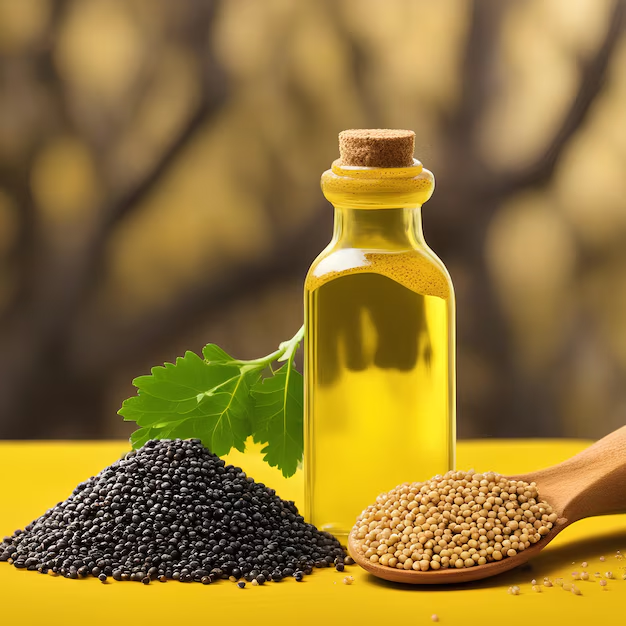
Mustard Oil

€15,00
Ayurvedic Uses Of Mustard Oil

Given its warming qualities, it is mostly used during the winters rather than summers. One can choose to use mustard oil during the colder months of the year depending on where you live.

In Ayurvedic texts, mustard seeds are mentioned under the group of herbs that cleanse the cranial cavity (Śīrṣavirecana Gaṇa). They are used for decoction enema (Āsthāpanopaga Gaṇa), have an anti-prurient activity (Kaṇḍūghna Gaṇa), induce emesis (Chardana Gaṇa), and have a pungent taste (Kaṭu rasa).

  • Generally, mustard oil is used for cooking. It is a monounsaturated fatty acid with omega-3 fatty acids which reduce the cholesterol levels in the body.
  • It has antibacterial, antifungal, and anti-inflammatory action. The antibacterial and antifungal properties work well against rashes and skin infections.
  • Its anti-inflammatory properties help in easing the condition of Irritable Bowel Syndrome (IBS) by reducing inflammation in the stomach lining.
  • It is used as a pain reliever for toothaches and joint or muscle pains topically. It is also used as a body massage and hair oil.
  • Mustard oil has shown efficacy in relieving cold and cough when applied onto the chest or inhaled. Its strong aroma helps in removing excess phlegm from the respiratory tract.
  • It has also been observed that using mustard oil for body massages is beneficial in relieving muscle pain and ache.
  • Massaging with mustard oil strengthens the muscles of the body, improves blood circulation, and generates warmth which relieves muscle tension.
  • In Panchakarma therapy, sudation or swedan also activates the sweat glands and is supposed to help in expelling toxins from the body through sweat and thus acts as a natural cleanse.
Categoria:
Mustard Oil
€15,00

Informação adicional

Peso 0,300 kg

Mustard Oil,250ml

Mustard is a condiment that has been used extensively for culinary, religious, and cultural purposes since time immemorial. Mustard oil has many uses in Ayurveda and is associated with a host of health benefits.

Mustard leaves, mustard seeds, and mustard oil have been common household items in Indian kitchens for ages.

Mustard has been an integral part of the Indian culture itself and its medicinal properties have been systematically evaluated and documented in classical Ayurvedic texts.

Mustard oil is still used for cooking, pain relief, massages, and various cultural rituals throughout India, especially in the Northeastern states like Assam.

During winter, many Indians use warm mustard oil to massage their feet after showering or bathing.  Mustard oil is equally popular in Indian cuisines and is used in a wide variety of traditional preparations.

It has a pungent, hot, and nutty taste and is used to marinate and flavor food. It is also used as a frying oil.

Mustard oil has other cultural uses in India as well. Drops of mustard oil are poured around the house as a welcoming gesture. It is also used as a homemade cosmetic during wedding ceremonies.

Ayurvedic Uses Of Mustard Oil

Given its warming qualities, it is mostly used during the winters rather than summers. One can choose to use mustard oil during the colder months of the year depending on where you live.

In Ayurvedic texts, mustard seeds are mentioned under the group of herbs that cleanse the cranial cavity (Śīrṣavirecana Gaṇa). They are used for decoction enema (Āsthāpanopaga Gaṇa), have an anti-prurient activity (Kaṇḍūghna Gaṇa), induce emesis (Chardana Gaṇa), and have a pungent taste (Kaṭu rasa).

  • Generally, mustard oil is used for cooking. It is a monounsaturated fatty acid with omega-3 fatty acids which reduce the cholesterol levels in the body.
  • It has antibacterial, antifungal, and anti-inflammatory action. The antibacterial and antifungal properties work well against rashes and skin infections.
  • Its anti-inflammatory properties help in easing the condition of Irritable Bowel Syndrome (IBS) by reducing inflammation in the stomach lining.
  • It is used as a pain reliever for toothaches and joint or muscle pains topically. It is also used as a body massage and hair oil.
  • Mustard oil has shown efficacy in relieving cold and cough when applied onto the chest or inhaled. Its strong aroma helps in removing excess phlegm from the respiratory tract.
  • It has also been observed that using mustard oil for body massages is beneficial in relieving muscle pain and ache.
  • Massaging with mustard oil strengthens the muscles of the body, improves blood circulation, and generates warmth which relieves muscle tension.
  • In Panchakarma therapy, sudation or swedan also activates the sweat glands and is supposed to help in expelling toxins from the body through sweat and thus acts as a natural cleanse.